
Pavement planning guide · North Texas
Chip seal vs asphalt for North Texas roads and properties.
A long private road, a commercial parking lot and an industrial entrance are different paving decisions. Compare chip seal and hot mix asphalt by traffic, support, surface expectations and maintenance, not just the lower initial surface price.
How the two surfaces differ
Chip seal applies asphalt binder and aggregate that is rolled into the surface. It can be used as a preservation treatment on suitable pavement or as part of an appropriate road-surfacing system on prepared support. It is not the same as parking-lot sealcoat.
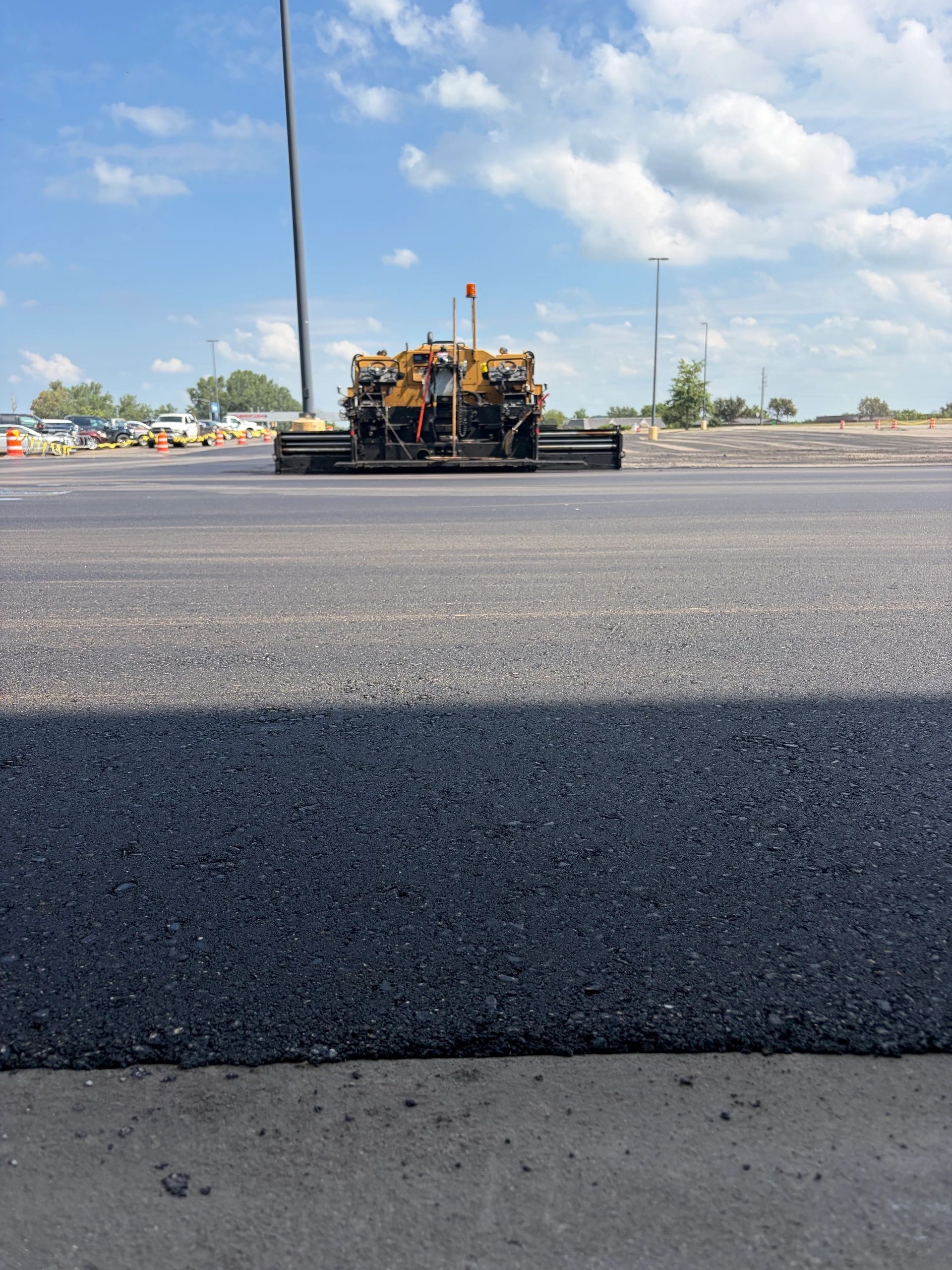
Hot mix asphalt is a compacted mixture of binder and aggregate placed in a designed layer. It generally provides a smoother driving surface and can contribute to the pavement structure as part of a suitable section. Neither option fixes an unstable base by itself.
Traffic matters more than road length alone
Chip seal can suit lower-speed private or ranch roads where a textured finish is acceptable. Concentrated turning, braking and standing loads may scuff or displace aggregate and can make other surfaces more appropriate.
Hot mix is often more suitable for commercial parking, frequent turning and smoother access near buildings. Heavy truck areas still need a load-aware section and may require concrete or other design choices. Do not assume that choosing asphalt automatically makes a road heavy-duty.
Start with base, water and the road profile
Inspect wet-weather soft spots, drainage crossings, crown or cross slope, edge support and the existing section. Surfacing a road that traps water does not eliminate the failure mechanism. Base repairs and drainage corrections should be identified separately from the surface choice.
For Weatherford, Gainesville, Denison and other North Texas road requests, provide length, width, vehicle types and photos of wet areas. A site-specific review determines whether the support can be retained or needs rebuilding.
- Record loaded trailers, delivery trucks and equipment traffic
- Locate standing water and eroded edges
- Identify steep grades and turning points
- Clarify drainage and culvert work boundaries
Compare finish, loose aggregate and maintenance
Chip seal has a more textured surface than hot mix. Initial loose aggregate and traffic restrictions may need management through rolling, sweeping and controlled vehicle use according to the project plan. It is not a promise of a loose-stone-free finish.
Both surfaces need condition-based maintenance. Chip seal may be renewed as a treatment cycle; asphalt may need crack treatment, repairs or later resurfacing. Weather, loads, preparation and application quality affect performance, so a universal life expectancy is not useful here.
Compare complete scope costs, not surface rates
Chip seal often has a lower initial surface-treatment cost than hot mix, but road preparation, repairs, grading, hauling and application requirements can change the total. No Iron Ridge rates are quoted in this guide.
A mixed plan may use asphalt at entrances or building areas and chip seal along a lower-speed road. Price each section with its required support and transitions. If the cheaper surface omits needed base work, it is not a fair comparison.
Choose the scope with the owner’s expectations in view
Discuss driving comfort, appearance, stone tolerance, dust concerns, drainage, maintenance and intended vehicles. For public or regulated road work, project documents may determine the allowable treatment rather than owner preference.
Send the road location and dimensions, existing material, photos, traffic description and desired timing to request a scope discussion. Confirm reopening conditions and maintenance responsibilities for the specific treatment.
Chip seal and hot mix asphalt for road planning
| Factor | Chip seal | Hot mix asphalt |
|---|---|---|
| Surface | Binder and rolled aggregate; textured finish | Compacted mix; generally smoother finish |
| Typical private-road use | Lower-speed roads with suitable support | Roads and access needing a smoother paved surface |
| Turning loads | Aggregate displacement may be a concern | Usually better suited, with an appropriate section |
| Structural role | Treatment does not correct weak support | Designed layer within a pavement section |
| Maintenance | Condition-based treatment renewal and repairs | Condition-based crack care, repairs and resurfacing |
| Cost comparison | Often lower treatment cost; preparation still matters | More mix and placement; section and logistics matter |
FAQ
Questions about chip seal vs asphalt in north texas.
Relevant services
Discuss the pavement scope behind the decision.
Markets & buyers
Planning work across North Texas.
More resources
Related pavement planning guides.
Discuss your project
Request a bid for your pavement project.
Send the property, current pavement condition and timing. Plans, photos and specs help us respond with a usable scope.