
Utility cut restoration · Trench repair
Utility cut restoration that matches the pavement around it.
Every utility cut leaves a seam in the pavement. Restored correctly, the trench disappears into the surrounding asphalt. Restored badly, it settles, cracks at the edges and becomes a permanent bump. Restoration should follow the required section, support and grade, which may differ from the original pavement.
Why utility cuts settle
A trench is only as good as its backfill. When backfill is not placed and compacted in controlled lifts, or the original pavement was not fully restored, the trench consolidates under traffic and the patch sinks below the surrounding surface. Water follows the seam, and the edges crack and ravel.
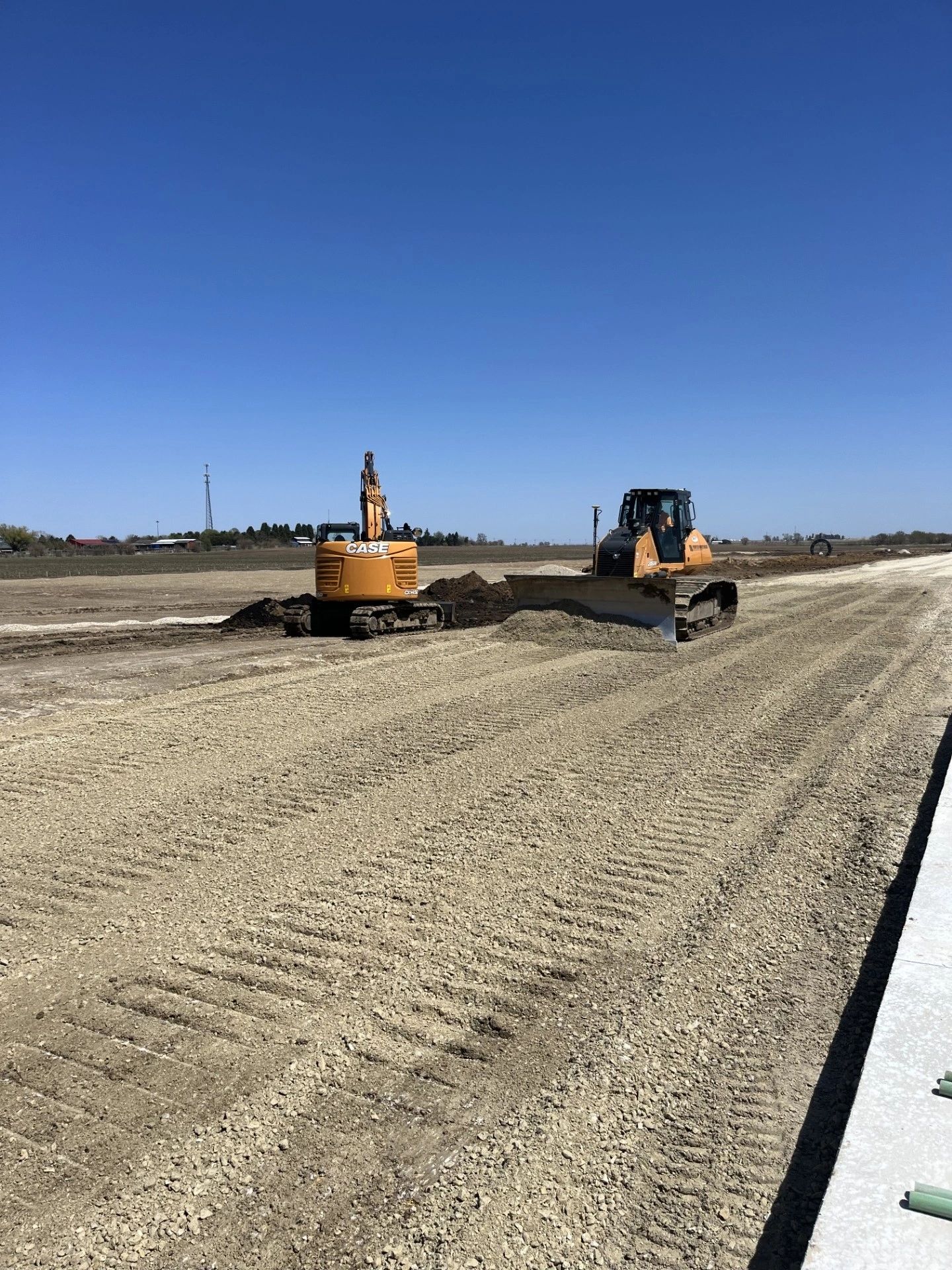
Restoration means excavating to firm material, compacting backfill in lifts, and rebuilding the pavement section to match what was removed, not just skinning asphalt over the trench.
Coordinating with utility work
Iron Ridge restores cuts after water, sewer, gas, electrical and fiber work on commercial properties and roadways. Scheduling restoration right behind the utility crew keeps sites presentable, limits the time trenches sit open to traffic and lets one paving contractor hold the finished grade across all of the cuts.
On properties with multiple cuts from different trades, batching the restoration into one mobilization is usually the most cost-effective route.
FAQ
Utility Cut Restoration FAQ: scope, cost and scheduling.
Related services
Services often paired with utility cut restoration.
Where we work
Utility Cut Restoration service areas and industries.
Discuss your project
Request a bid for utility cut restoration.
Send the property, current pavement condition and timing. Plans, photos and specs help us respond with a usable scope.